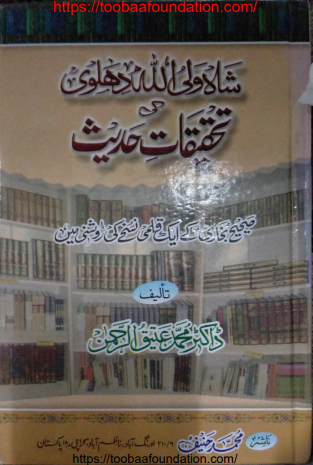
شاہ ولى اللہ دهلوى کی تحقيقات حديث
صحیح بخاری کے ایک قلمی نسخے کی روشنی میں
تأليف : ڈاکٹر محمد عتیق الرحمٰن
Shah waliullah dehlvi ki tahqeqaat e hadeez
Sahih bukhari k qalmi nuskhay ki roshani me .
By : Dr Atiq u rahman.
شاہ ولى اللہ دهلوى کی تحقيقات حديث
صحیح بخاری کے ایک قلمی نسخے کی روشنی میں
تأليف : ڈاکٹر محمد عتیق الرحمٰن
Shah waliullah dehlvi ki tahqeqaat e hadeez
Sahih bukhari k qalmi nuskhay ki roshani me .
By : Dr Atiq u rahman.
شاہ ولى اللہ دهلوى کی تحقيقات حديث
صحیح بخاری کے ایک قلمی نسخے کی روشنی میں
تأليف : ڈاکٹر محمد عتیق الرحمٰن
Shah waliullah dehlvi ki tahqeqaat e hadeez
Sahih bukhari k qalmi nuskhay ki roshani me .
By : Dr Atiq u rahman.
| BOOK NAME | |
|---|---|
| BOOK AUTHOR | |
| BOOK PUBLISHER | |
| BOOK PAGES | 211 |
| LIBRARY | |
| FORMAT | |
| LANGUAGE | |
| Binding ( hard/ card) | You will get this book easily in format of Kindle, PDF, Paper back and in hard cover. I will suggest you to buy this book in PDF from us that is much cheap for you through WhatsApp or email etc. |
There are no reviews yet.

The Muwatta of Imam Malik, compiled during the early Abbasid period, is regarded by some scholars, including Shah Waliyullah, as the most authentic book on Ḥadith. The juristic verdicts in Muwatta’
reflect the practice of the Medinese and the consensus of the Medinese scholars.
After the demise of the Holy Prophet (may peace be upon him), many of his Companions settled in the conquered provinces. Some of their successors collected and codified Hadith. For example, Ibn Jariḥ
in Mecca, Awza’i in Syria, Hammad in Başrah, Haitham in Wasit, Ma’mar in the Yemen, Ibn Mubarak in Khurasan and Jarir b. Hamid in Rayy collected Hadith. But none of these collections could compare
with the Muwatta’ of Imam Malik, who passed his whole life in Medina and, therefore, had direct access to the most reliable authorities on Hadith, because most of the leading Companions of the Holy Prophet
(may peace be upon him) and their successors lived and died in Medina and narrated traditions from the Holy Prophet (may peace be upon him). The Muwatta’ of Imam Malik is based on the traditions narrated by them and the juristic verdicts given by them.
The word “Muwatta” literally means the trodden or beaten path. In his book, Musawwa, Shah Waliyullah says that “trodden path” or “beaten path” means the path followed by eminent religious
authorities. In other words, it means those verdicts which have been discussed by all religious scholars and about which there is complete agreement. According to Maulānā Sulaiman Nadvi, “Muwatta” means that trodden or beaten path which has been trodden upon by all the Companions of the Holy Prophet (may peace be upon him), or, in other words, it means the agreed practice of the Companions of the Holy Prophet (may peace be upon him).
Before Imam Malik finalised his book, the Muwaṭṭa’ contained about ten thousand traditions of the Holy Prophet (may peace be upon him), but since Imam Malik exercised great care in selecting Hadith (traditions), he omitted eight thousand traditions. In its final form, the Muwaṭṭa’ contains only about two thousand aḥadīth (traditions). Since the Muwatta’ deals only with such aḥādith as have a bearing on juristic verdicts, it omits many chapters and headings found in the Sahihs of Imam Bukhārī, Imam Muslim, Tirmidhi, and others.
Muwatta’ has been narrated from Imām Mālik in thirty different ways. Of these, sixteen are famous. Four narrations, those by Yaḥyā, Ibn Bukair, Abū Mus’ab and Ibn Wahb, are most authoritative, but Yahya’s narration surpasses them all in popularity and fame. Imam Malik’s jurisprudence (fiqh) produced lasting effects on the entire Muslim world. His disciples spread in all the provinces of the Muslim Empire. It is true that Imam Abu Hanifah’s disciples were scattered in the Hijäz, Persia and Transoxania, but they did not reach Africa and Spain. Imām Awzā’i’s fiqh (jurisprudence) won popularity in Spain, but it did not benefit the people of Iraq and Persia. On the other hand, Imam Malik’s disciples carried his juristic learning to all corners of the Muslim world.
The Muwaṭṭā’ of Imam Malik was compiled during the reign of Mansur, the second Abbasid Caliph. After he was installed as Caliph in 136 AH., Mansur made his first Pilgrimage to Mecca. He visited Medina where he was received by leading scholars and men of eminence. Sufyan Thawrī, Sulaiman Khwaṣṣ and Imam Malik also came to greet him. When Mansur saw Imam Malik, he addressed him saying: “I have become disgusted with the differences of the jurists on Islamic law in different regions of the Empire. There is nothing of juristic learning in Iraq. The Syrians are known for their ardent love for jihad There is little learning among them. All juristic knowledge and scholarship is centred in Hijaz and you are the leader of the scholars of Hijaz. I wish that your book, Muwaṭṭa’, may be kept in a prominent place in the Ka’bah, so that all the people should refer to it on juristic questions. I also wish that copies of the Muwaṭṭā’ may be circulated in all parts of the Empire so that all juristic verdicts may conform to it.” But Imam Malik expressed his disagreement with the opinion of Manşür. He said: “The Companions of the Holy Prophet (may peace be upon him) settled in all provinces of the Empire. Their juristic opinions and verdicts command respect and reverence of jurists in different regions of the Empire and the people of these regions follow their juristic opinions. Under these conditions, the people should not be forced to follow the opinions of a single jurist who is not infallible, after all, and may commit errors.”
Another incident of the same kind shows the sturdy independence of mind of Imam Malik and his refusal to submit to the wishes of the governmental authority. Although Manṣur was very kind to the Imām, the latter never recognised the legitimacy of his government. Once he issued a fatwa that the caliphate belongs rightfully to Nafs Zakiyyā, a descendant of the Holy Prophet (may peace be upon him). The people objected saying that they had sworn fealty to Manṣur. Imām Malik said: “Manṣur has coerced you into doing this and the Shari’ah does not regard as valid any act done under coercion. There is a hadith (tradition of the Holy Prophet) that if a man is forced to divorce his wife, the divorce would be invalid.” On hearing this, Ja’far, the Governor of Medina, asked the people to renew their oath of fealty to Mansur and ordered Imam Malik not to issue any fatwa declaring that a divorce obtained by force or under coercion is invalid as this would strengthen the case of those who regarded as invalid the
oath of fealty obtained by Manṣur under coercion. But Imam Malik refused to be browbeaten and continued to give his verdict against divorce under coercion. For this act of disobedience to the governmental authority, Imam Malik was flogged in public until he bled white, but still he refused to bow to the wishes of the rulers.
22 December 1979
(Prof) Mazheruddin Siddiiq
The Muwatta of Imam Malik holds significant importance in the Hadith tradition of Islamic studies for several reasons:
In summary, the Muwatta of Imam Malik is highly significant in the Hadith tradition of Islamic studies due to its authenticity, early compilation, geographical context, integration with fiqh, recognition by scholars, and its role in providing insights into early Islamic society and culture. It continues to be a vital source for scholars and students of Islam seeking to understand the Prophet’s traditions and the foundations of Islamic jurisprudence.
The English translation of the Muwatta of Imam Malik:
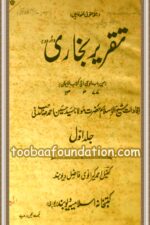
تقریر بخاری اردو (جلد اول)
افادات : حضرت مولانا سید حسین احمد مدنی
مرتبہ : مولانا کفیل احمد کیرانوی
پیشکش : طوبیٰ فاؤنڈیشن
Taqreer Bukhari Urdu (vol : 1)
Afadaat : Hazrat Maulana Syed Hussain Ahmed Madni
By : Maulana Kafeel Ahmed Karanvi

تکملہ فتح الملہم – منہج کا تحلیلی جائزہ
(تکملہ فتح الملہم از : شیخ الاسلام حضرت مفتی تقی عثمانی )
(مقالہ برائے پی ایچ۔ ڈی، اولڈ سکیم )
( سیشن ۲۰۱۱ء۔۲۰۱۶ء)
مقالہ نگار :ظل ہما
نگران مقاله: ڈاکٹر محمد سعد صدیقی
چیئرمین
ادارہ علوم اسلامیہ، جامعہ پنجاب، لاہور
Takmila Fath al-Mulhim – Manhaj ka Tahlili Jaiza
) “Takmila Fath al-Mulhim” az: Shaykh al-Islam Hazrat Mufti Taqi Usmani(
(Phd Thesis)
Maqala Nigar: Zill-e-Huma
Nigran Maqala: Dr. Muhammad Saad Siddiqi

Contribution of Darul-‘Ulum Deoband to the
Development of Tafsir
Submitted to the University of Kashmir
For the award of Master of Philosophy (M.Phil)
In Islamic Studies
By: Bilal Ahmad Wani
Under the supervision of
Prof. (Dr.) Naseem Ahmad Shah
Shah-i-Hamadan Institute of Islamic Studies
University of Kashmir, Hazratbal Campus, Srinagar-190006
June 2012
MORE FOR TOOBAA FOUNDATION’S BOOK LOVERS
تفسیر بیان القرآن مولانا اشرف علی تھانوی کا تحقیقی و تنقیدی مطالعہ
(پی ایچ ڈی مقالہ)
حضرت حکیم الامت مولانا اشرف علی تھانویؒ بحیثیت مفسرِ قرآن
(پی ایچ ڈی مقالہ)
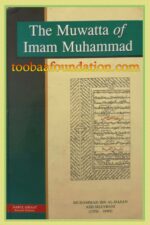
Imam Malik ibn Anas and Imam Muhammad ibn al-Hasan. This topic is of particular interest to students of hadith, as it relates to the transmission and narration of the Muwatta, a significant collection of hadith and legal rulings. Let’s break down the topic step by step:
In summary, the topic of “The Muwatta of Imam Malik ibn Anas in the narration of Imam Muhammad ibn al-Hasan” refers to the process of how Imam Muhammad ibn al-Hasan, a student of Imam Malik, learned and transmitted the Muwatta collection. This transmission helps maintain the accuracy and authenticity of the collection, making it a reliable source of guidance for students of hadith, scholars, and anyone seeking a deeper understanding of Islamic law and teachings.
The Muwatta of Imam Muhammad is an important and influential collection of hadith (sayings, actions, and approvals of the Prophet Muhammad) and legal rulings in Islamic jurisprudence (fiqh). It holds a significant place in Islamic scholarship and is highly regarded by scholars, jurists, and students of Islam.
Here are some key points that describe the importance of the Muwatta of Imam Muhammad:
In summary, the Muwatta of Imam Muhammad holds immense importance due to its authenticity, comprehensive content, influence on jurisprudence, accessibility, cross-tradition appeal, historical insights, and role in preserving Islamic tradition. It continues to be studied and referenced by scholars and students of Islam worldwide as a valuable source of guidance and knowledge.
Imam Muhammad ibn Hasan al-Shaybani, known as one of the “Two Companions,” is one of the distinguished disciples of Imam Abu Hanifa. Among his two prominent disciples, the other is Imam Abu Yusuf. Imam Muhammad’s works encompass all aspects of jurisprudence and law, and they are highly comprehensive. His significant contributions have greatly influenced later Hanafi scholars.
Within the Hanafi school of thought, Imam Muhammad al-Shaybani holds a central position. He is considered a key figure in Sunni jurisprudential tradition and a bridge between different schools of thought. Among his contemporaries, his esteemed scholars include both Imam Abu Hanifa and Imam Malik. Notably, Imam Shafi’i is also counted among his students, and Imam Ahmad ibn Hanbal, a student of Imam Shafi’i, further connects him to the third major school of thought. Thus, Imam Muhammad al-Shaybani’s teachings are intertwined with the founders of all four major jurisprudential schools, showcasing his profound influence.



Be the first to review “Shah waliullah dehlvi ki tahqeqaat e hadeez,Sahih bukhari k qalmi nuskhay ki roshani me . By : Dr Atiq u rahman.”