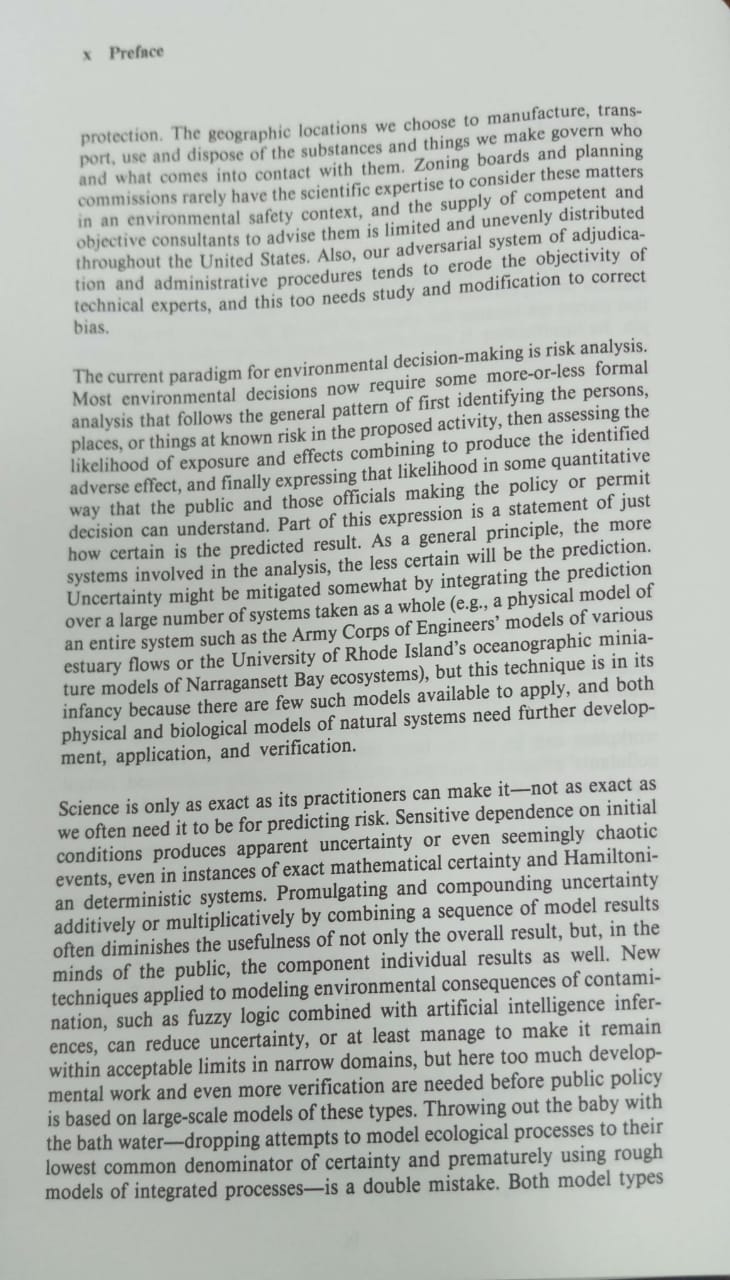
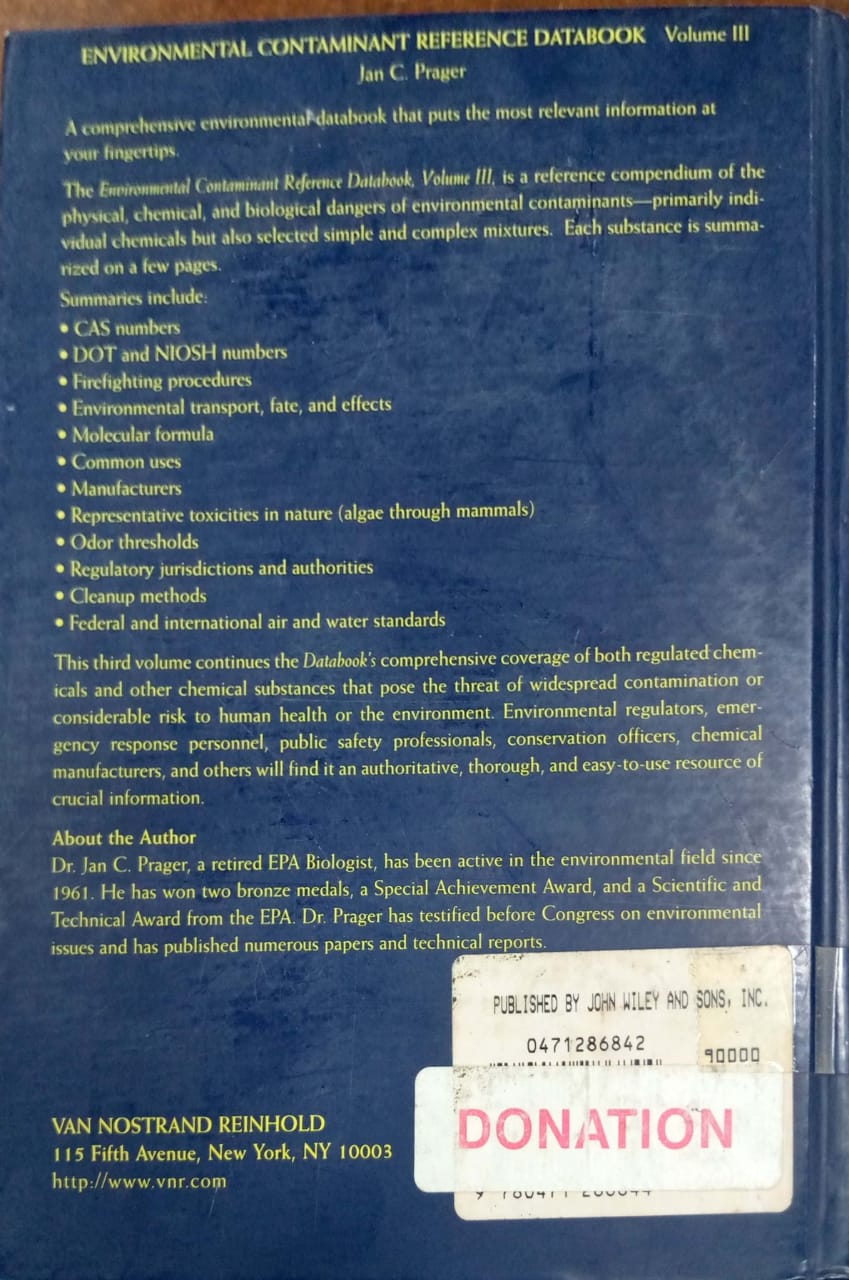
ENVIRONMENTAL CONTAMINANT REFERENCE DATA BOOK VOLUME III
JAN C. PRAGER

Crime and Everyday Life
Insights and Implications Society
Marcus Felson
This book is currently available in the Municipal Library Pakistan, Rawalpindi Liaquat Bagh, you can download and view the index of the book.If you want the full PDF of this book, you can email us or WhatsApp us, you must inform us in the comments.
thank you
ENVIRONMENTAL CONTAMINANT REFERENCE DATA BOOK VOLUME III
JAN C. PRAGER

| BOOK AUTHOR | |
|---|---|
| BOOK PUBLISHER | |
| LIBRARY | |
| FORMAT | |
| CATEGORY | CATEGORY |
Crime and Everyday Life
Insights and Implications Society
Marcus Felson
This book is currently available in the Municipal Library Pakistan, Rawalpindi Liaquat Bagh, you can download and view the index of the book.If you want the full PDF of this book, you can email us or WhatsApp us, you must inform us in the comments.
thank you
The Muwatta of Imam Malik, compiled during the early Abbasid period, is regarded by some scholars, including Shah Waliyullah, as the most authentic book on Ḥadith. The juristic verdicts in Muwatta’
reflect the practice of the Medinese and the consensus of the Medinese scholars.
After the demise of the Holy Prophet (may peace be upon him), many of his Companions settled in the conquered provinces. Some of their successors collected and codified Hadith. For example, Ibn Jariḥ
in Mecca, Awza’i in Syria, Hammad in Başrah, Haitham in Wasit, Ma’mar in the Yemen, Ibn Mubarak in Khurasan and Jarir b. Hamid in Rayy collected Hadith. But none of these collections could compare
with the Muwatta’ of Imam Malik, who passed his whole life in Medina and, therefore, had direct access to the most reliable authorities on Hadith, because most of the leading Companions of the Holy Prophet
(may peace be upon him) and their successors lived and died in Medina and narrated traditions from the Holy Prophet (may peace be upon him). The Muwatta’ of Imam Malik is based on the traditions narrated by them and the juristic verdicts given by them.
The word “Muwatta” literally means the trodden or beaten path. In his book, Musawwa, Shah Waliyullah says that “trodden path” or “beaten path” means the path followed by eminent religious
authorities. In other words, it means those verdicts which have been discussed by all religious scholars and about which there is complete agreement. According to Maulānā Sulaiman Nadvi, “Muwatta” means that trodden or beaten path which has been trodden upon by all the Companions of the Holy Prophet (may peace be upon him), or, in other words, it means the agreed practice of the Companions of the Holy Prophet (may peace be upon him).
Before Imam Malik finalised his book, the Muwaṭṭa’ contained about ten thousand traditions of the Holy Prophet (may peace be upon him), but since Imam Malik exercised great care in selecting Hadith (traditions), he omitted eight thousand traditions. In its final form, the Muwaṭṭa’ contains only about two thousand aḥadīth (traditions). Since the Muwatta’ deals only with such aḥādith as have a bearing on juristic verdicts, it omits many chapters and headings found in the Sahihs of Imam Bukhārī, Imam Muslim, Tirmidhi, and others.
Muwatta’ has been narrated from Imām Mālik in thirty different ways. Of these, sixteen are famous. Four narrations, those by Yaḥyā, Ibn Bukair, Abū Mus’ab and Ibn Wahb, are most authoritative, but Yahya’s narration surpasses them all in popularity and fame. Imam Malik’s jurisprudence (fiqh) produced lasting effects on the entire Muslim world. His disciples spread in all the provinces of the Muslim Empire. It is true that Imam Abu Hanifah’s disciples were scattered in the Hijäz, Persia and Transoxania, but they did not reach Africa and Spain. Imām Awzā’i’s fiqh (jurisprudence) won popularity in Spain, but it did not benefit the people of Iraq and Persia. On the other hand, Imam Malik’s disciples carried his juristic learning to all corners of the Muslim world.
The Muwaṭṭā’ of Imam Malik was compiled during the reign of Mansur, the second Abbasid Caliph. After he was installed as Caliph in 136 AH., Mansur made his first Pilgrimage to Mecca. He visited Medina where he was received by leading scholars and men of eminence. Sufyan Thawrī, Sulaiman Khwaṣṣ and Imam Malik also came to greet him. When Mansur saw Imam Malik, he addressed him saying: “I have become disgusted with the differences of the jurists on Islamic law in different regions of the Empire. There is nothing of juristic learning in Iraq. The Syrians are known for their ardent love for jihad There is little learning among them. All juristic knowledge and scholarship is centred in Hijaz and you are the leader of the scholars of Hijaz. I wish that your book, Muwaṭṭa’, may be kept in a prominent place in the Ka’bah, so that all the people should refer to it on juristic questions. I also wish that copies of the Muwaṭṭā’ may be circulated in all parts of the Empire so that all juristic verdicts may conform to it.” But Imam Malik expressed his disagreement with the opinion of Manşür. He said: “The Companions of the Holy Prophet (may peace be upon him) settled in all provinces of the Empire. Their juristic opinions and verdicts command respect and reverence of jurists in different regions of the Empire and the people of these regions follow their juristic opinions. Under these conditions, the people should not be forced to follow the opinions of a single jurist who is not infallible, after all, and may commit errors.”
Another incident of the same kind shows the sturdy independence of mind of Imam Malik and his refusal to submit to the wishes of the governmental authority. Although Manṣur was very kind to the Imām, the latter never recognised the legitimacy of his government. Once he issued a fatwa that the caliphate belongs rightfully to Nafs Zakiyyā, a descendant of the Holy Prophet (may peace be upon him). The people objected saying that they had sworn fealty to Manṣur. Imām Malik said: “Manṣur has coerced you into doing this and the Shari’ah does not regard as valid any act done under coercion. There is a hadith (tradition of the Holy Prophet) that if a man is forced to divorce his wife, the divorce would be invalid.” On hearing this, Ja’far, the Governor of Medina, asked the people to renew their oath of fealty to Mansur and ordered Imam Malik not to issue any fatwa declaring that a divorce obtained by force or under coercion is invalid as this would strengthen the case of those who regarded as invalid the
oath of fealty obtained by Manṣur under coercion. But Imam Malik refused to be browbeaten and continued to give his verdict against divorce under coercion. For this act of disobedience to the governmental authority, Imam Malik was flogged in public until he bled white, but still he refused to bow to the wishes of the rulers.
22 December 1979
(Prof) Mazheruddin Siddiiq
The Muwatta of Imam Malik holds significant importance in the Hadith tradition of Islamic studies for several reasons:
In summary, the Muwatta of Imam Malik is highly significant in the Hadith tradition of Islamic studies due to its authenticity, early compilation, geographical context, integration with fiqh, recognition by scholars, and its role in providing insights into early Islamic society and culture. It continues to be a vital source for scholars and students of Islam seeking to understand the Prophet’s traditions and the foundations of Islamic jurisprudence.
The English translation of the Muwatta of Imam Malik:
The book “Tehreek-e-Pakistan mein Khittah-e-Pothohar ka Kirdar” (The Role of Pothohar Region in the Pakistan Movement) is a sincere and research-based effort by Safdar Shahid, compiled with dedication and devotion. The work was initiated in March 1992 and, after a full year of continuous research, struggle, and effort, it was completed and published on the historic occasion of Pakistan’s Golden Jubilee celebrations.
Despite the challenges of official duties and family responsibilities, the author sacrificed his personal comfort and tirelessly traveled across the length and breadth of the Pothohar region—village to village, town to town, and valley to valley—in search of historical accounts and testimonies. His aim was to bring forth the struggles, sacrifices, and leadership of the people of Pothohar, who played a remarkable and unforgettable role in the Pakistan Movement.
This book serves as a beacon of guidance for the younger generation by paying tribute to the unsung heroes, workers, and leaders of Pothohar, whose devotion to the cause of Pakistan remains exemplary. Though the author humbly acknowledges the limitations of his individual effort, the book reflects a deep passion for research and national service, making it an invaluable contribution to the history of Pakistan’s independence movement.
The author presents this work with utmost humility and sincerity to the readers of intellect and vision, hoping they will enrich it with their constructive feedback and thoughtful suggestions, thereby further enhancing its value and impact.
Toobaa Foundation supports scholars pursuing MPhil, PhD, and advanced studies.It aims to digitize all libraries across Pakistan , public and private.
The foundation lists and introduces available books and rare manuscripts.It scans and provides books in PDF and Kindle formats for easy access.
irfanakbar
best