I have seen miracles happen to men and women in all walks of life all over the world. Miracles will happen to you, too—when you begin using the magic power of your subconscious mind. This book is designed to teach you that your habitual thinking and imagery mold, fashion, and create your destiny; for as a man thinketh in his sub¬ conscious mind, so is he. • Do you know the answers? Why is one man sad and another man happy? Why is one man joyous and prosperous and another man poor and misera¬ ble? Why is one man fearful and anxious and another full of faith and confidence? Why does one man have a beautiful, lux¬ urious home while another man lives out a meager existence in a slum? Why is one man a great success and another an ab¬ ject failure? Why is one speaker outstanding and immensely popular and another mediocre and unpopular? Why is one man a genius in his work or profession while the other man toils and moils all his life without doing or accomplishing anything worth while? Why is one man healed of a so-called incurable disease and another isn’t? Why is it so many good, kind religious people suffer the tortures of the damned in their mind and body? Why is it many immoral and irreligious people succeed and prosper and enjoy radiant health? Why is one woman happily married and her sister very unhappy and frustrated? Is there an answer to these questions in the workings of your conscious and sub¬ conscious minds? There most certainly is. How This Book Can Work Miracles in Your Life 8 How This Book Can Work Miracles in Your Lije to the effectiveness of prayer. What of the many humble prayers of children, the simple thanksgiving of grace at the table daily, the faithful devotions wherein the individual seeks only com¬ munion with God? My work with people has made it necessary for me to study the various approaches to prayer. I have ex¬ perienced the power of prayer in my own life, and I have talked and worked with many people who also have enjoyed the help of prayer. The problem usually is how to tell others how to pray. People who are in trouble have difficulty in thinking and acting reasonably. They need an easy formula to follow, an obviously workable pattern that is simple and specific. Often they must be led to approach the emergency. • Unique feature of this book The unique feature of this book is its down-to-earth prac¬ ticality. Here you are presented with simple, usable techniques and formulas which you can easily apply in your workaday world. I have taught these simple processes to men and women all over the world, and recently over a thousand men and women of all religious affiliations attended a special class in Los Angeles where I presented the highlights of what is offered in the pages of this book. Many came from distances of two hundred miles for each class lesson. The special features of this book will ap¬ peal to you because they show you why oftentimes you get the opposite of what you prayed for and reveal to you the reasons why. People have asked me in all parts of the world and thou¬ sands of times, “Why is it I have prayed and prayed and got no answer?” In this book you will find the reasons for this common complaint. The many ways of impressing the subconscious min d and getting the right answers make this an extraordinarily valu¬ able book and an ever-present help in time of trouble. • What do you believe? It is not the thing believed in that brings an answer to man’s prayer; the answer to prayer results when the individual’s sub¬ conscious mind responds to the mental picture or thought in his mind. This law of belief is operating in all religions of the world and is the reason why they are psychologically true. The Bud¬ dhist, the Christian, the Moslem, and the Hebrew all may get answers to their prayers, not because of the particular creed, religion, affiliation, ritual, ceremony, formula, liturgy, incanta¬ tion, sacrifices, or offerings, but solely because of belief or mental acceptance and receptivity about that for which they pray. The law of fife is the law of belief, and belief could be summed up briefly as a thought in your mind. As a man thinks, feels, and believes, so is the condition of his mind, body, and circum¬ stances. A technique, a methodology based on an understanding of what you are doing and why you are doing it will help you to bring about a subconscious embodiment of all the good things of life. Essentially, answered prayer is the realization of your heart’s desire. • Desire is prayer Everyone desires health, happiness, security, peace of mind, true expression, but many fail to achieve clearly defined results. A university professor admitted to me recently, “I know that if I changed my mental pattern and redirected my emotional life, my ulcers would not recur, but I do not have any technique, process, or modus operandi. My mind wanders back and forth on my many problems, and I feel frustrated, defeated, and un¬ happy.” This professor had a desire for perfect health; he needed a knowledge of the way his mind worked which would enable him to fulfill his desire. By practicing the healing methods out¬ lined in this book, he became whole and perfect. • There is one mind common to all individual men (Emerson) The miracle-working powers of your subconscious mind existed before you and I were bom, before any church or world existed. The great eternal truths and principles of life antedate all religions. It is with these thoughts in mind that I urge you in the following chapters to lay hold of this wonderful, magical, transforming power which will bind up mental and physical wounds, proclaim liberty to the fear-ridden mind, and liberate• Reason for ■writing tliis book It is for the express purpose of answering and clarifying the above questions and many others of a similar nature that mo¬ tivated me to write this book. I have endeavored to explain the great fundamental truths of your mind in the simplest language possible. I believe that it is perfectly possible to explain the basic, foundational, and fundamental laws of life and of your mind in ordinary everyday language. You will find that the language of this book is that used in your daily papers, current periodicals, in your business offices, in your home, and in the daily work¬ shop. I urge you to study this book and apply the techniques outlihed therein; and as you do, I feel absolutely convinced that you will lay hold of a miracle-working power that will lift you up from confusion, misery, melancholy, and failure, and guide you to your true place, solve your difficulties, sever you from emotional and physical bondage, and place you on the royal road to freedom, happiness, and peace of mind. This miracleworking power of your subconscious mind can heal you of your sickness, make you vital and strong again. In learning how to use your inner powers, you will open the prison door of fear and enter into a life described by Paul as the glorious liberty of the sons of God. • Releasing the miracle-working power A personal healing will ever be the most convincing evi¬ dence of our subconscious powers. Over forty-two years ago I resolved a malignancy—in medical terminology it was called a sarcoma—by using the healing power of my subconscious mind which created me and still maintains and governs all my vital functions. The technique I applied is elaborated on in this book, and I feel sure that it will help others to trust the same Infinite Healing Presence lodged in the subconscious depths of all men. Through the kindly offices of my doctor friend, I suddenly real¬ ized that it was natural to assume that the Creative Intelligence which made all my organs, fashioned my body, and started my Row This Book Can Work Miracles in Your Life 7 heart, could heal its own handiwork. The ancient proverb says, “The doctor dresses the wound and God heals it.” • Wonders happen when you pray effectively Scientific prayer is the harmonious interaction of the con¬ scious and subconscious levels of mind scientifically directed for a specific purpose. This book will teach you the scientific way to tap the realm of infinite power within you enabling you to get what you really want in life. You desire a happier, fuller, and richer life. Begin to use this miracle-working power and smooth your way in daily affairs, solve business problems, and bring harmony in family relationships. Be sure that you read this book several times. The many chapters will show you how this won¬ derful power works, and how you can draw out the hidden in¬ spiration and wisdom that is within yoq. Learn the simple tech¬ niques of impressing the subconscious mind,) Follow the new scientific way in tapping the infinite storehouse. Read this book carefully, earnestly, and lovingly. Prove to yourself the amazing way it can help you. It could be and I believe it will be the turning point of your life. • Everybody prays Do you know how to pray effectively? How long is it since you prayed as part of your everyday activities? In an emergency, in time of danger or trouble, in illness, and when death lurks, prayers pour forth—your own and friends. Just read your daily newspaper. It is reported that prayers are being offered up all over the nation for a child stricken with a so-called incurable ailment, for peace among nations, for a group of miners trapped in a flooded mine. Later it is reported that when rescued, the min ers said that they prayed while waiting for rescue; an airplane pilot says that he prayed as he made a successful emergency landing. Certainly, prayer is an ever-present help in time of trouble; but you do not have to wait for trouble to make prayer an integral and constructive part of your life. The dramatic an¬ swers to prayer make headlines and are the subject of testimonies you completely from the limitations of poverty, failure, misery, lack, and frustration. All you have to do is unite mentally and emotionally with the good you wish to embody, and the creative powers of your subconscious will respond accordingly. Begin now, today, let wonders happen in your life! Keep on, keeping on until the day breaks and the shadows flee away.
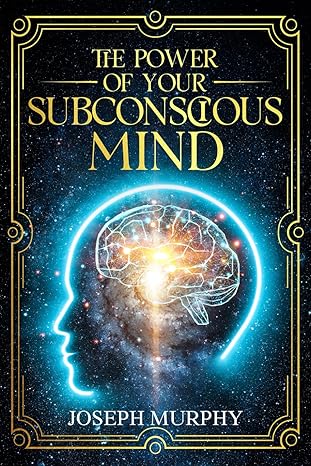
The Power Of Your Subconcious Mind PDF
The Power of Your Subconscious Mind by Joseph Murphy is a life-changing guide that shows how miracles can happen in your life when you learn to work with your subconscious mind. The book explains that your habitual thoughts, beliefs, and mental imagery directly shape your destiny. By understanding and impressing your subconscious mind, you can overcome obstacles, heal your body, attract success, and create happiness.
یہ کتاب سکھاتی ہے کہ آپ کے subconscious mind میں چھپی طاقت کو استعمال کر کے آپ اپنی زندگی میں حیرت انگیز تبدیلیاں لا سکتے ہیں۔ مصنف کے مطابق ہمارے خیالات، یقینات اور تصویری تصورات ہماری تقدیر کو تشکیل دیتے ہیں۔ صحیح طریقہ سیکھ کر ہم اپنی مشکلات دور کر سکتے ہیں، صحت بہتر بنا سکتے ہیں، کامیابی حاصل کر سکتے ہیں اور خوشی پیدا کر سکتے ہیں۔
| BOOK NAME | |
|---|---|
| BOOK AUTHOR | |
| LIBRARY SECTION |
Customer Reviews
There are no reviews yet.
Related products
-
-

ENVIRONMENTAL CONTAMINANT REFERENCE DATA BOOK VOLUME III BY JAN C. PRAGER
Crime and Everyday Life
Insights and Implications Society
Marcus FelsonThis book is currently available in the Municipal Library Pakistan, Rawalpindi Liaquat Bagh, you can download and view the index of the book.If you want the full PDF of this book, you can email us or WhatsApp us, you must inform us in the comments.
thank you -

THE EARLY DEVELOPMENT OF MOHAMMEDANISM BY DAVID S. MARGOLIOUTH
THE EARLY DEVELOPMENT OF MOHAMMEDANISM BY DAVID S. MARGOLIOUTH
-
-

EDUCATION AND THE MUSLIM WORLD CHALLENGE & RESPONSE
EDUCATION AND THE MUSLIM WORLD CHALLENGE & RESPONSE
INSTITUTE OF POLICY STUDIES
EDITORE NIAZ ERFAN & ZAID A.VALIE
ISBN 969-448-29-9
BOOK PROMOTORS (PVT)LTD MARKAZ F7 ISLAMABAD, PAKISTAN -

AL FIQA WAL FUQAAHA FIQA OR FUQAHA KI FAZEELAT BY HAZRAT MOLANA NAEEM UL DEEN
AL FIQA WAL FUQAAHA FIQA OR FUQAHA KI FAZEELAT BY HAZRAT MOLANA NAEEM UL DEEN
This book is presented for introduction if you want to buy this book or get its pdf then you can contact us through whatsapp number or comments in review, also through facebook page. -

THE FULBRIGEHT DIFFERENCE, 1948-1992 EDITED BY RICHARD T. ARANDT DAVID LEE RUBINE
THE FULBRIGEHT DIFFERENCE, 1948-1992
EDITED BY RICHARD T. ARANDT DAVID LEE RUBINE
Tranaction Publishers New Brunswick(U.S.A) and London(U.K)
Pages 448You visit this website and buy books in PDF and Kindle at a very low price compared to Amazon and other bookshops. Let it be clear that this website is free for books. You buy books from this website and support our mission. Financial support. The purpose of this website is to unite libraries around the world and create a digital catalog of the books in them and make the rare manuscripts scanned and made available in PDF and Kindle format for the service of scholars.
Go ahead and support us in this mission.OTher Libarary Links
Knoozedil Blog
-

HADITH SCIENCES BY STOYANKA KENDEROVA
HADITH SCIENCES BY STOYANKA KENDEROVA
HADITH SCIENCES BY STOYANKA KENDEROVA
This book is presented for introduction if you want to buy this book or get its pdf then you can contact us through whatsapp number or comments in review, also through facebook page.


Be the first to review “The Power Of Your Subconcious Mind PDF”