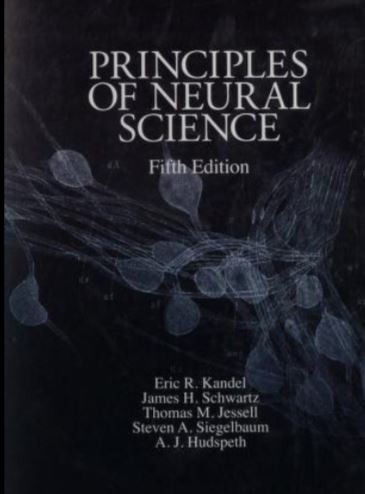
Principles of Neural Science

Principles of Neural Science is widely considered the definitive, gold-standard textbook in neuroscience and neurobiology. First authored by Nobel Laureate Eric R. Kandel alongside leading neuroscientists, the book provides a comprehensive, molecular-to-behavioral framework for understanding how the brain and nervous system function.

Core Themes & Key Coverage

  • Cellular & Molecular Neurobiology: Detailed exploration of neuron structure, ion channels, resting membrane potentials, action potentials, and synaptic transmission.
  • Sensory Perception: How the nervous system encodes, processes, and interprets environmental inputs, covering vision, auditory systems, touch, pain, taste, and smell.
  • Motor Control & Movement: Mechanisms governing voluntary movement, reflex arcs, spinal circuits, the basal ganglia, cerebellum, and motor cortex.
  • Cognitive Neuroscience & High-Level Function: Brain systems underlying perception, attention, language, emotion, decision-making, and executive control.
  • Learning, Memory, & Plasticity: Molecular and cellular mechanisms of neural plasticity, including long-term potentiation (LTP), synaptic changes, and memory storage.
  • Neural Development & Disease: Neural tube formation, axon guidance, synaptogenesis, and the neuropathology of conditions like Alzheimer’s, Parkinson’s, schizophrenia, and epilepsy.
Principles of Neural Science is widely considered the definitive, gold-standard textbook in neuroscience and neurobiology. First authored by Nobel Laureate Eric R. Kandel alongside leading neuroscientists, the book provides a comprehensive, molecular-to-behavioral framework for understanding how the brain and nervous system function.

Core Themes & Key Coverage

  • Cellular & Molecular Neurobiology: Detailed exploration of neuron structure, ion channels, resting membrane potentials, action potentials, and synaptic transmission.
  • Sensory Perception: How the nervous system encodes, processes, and interprets environmental inputs, covering vision, auditory systems, touch, pain, taste, and smell.
  • Motor Control & Movement: Mechanisms governing voluntary movement, reflex arcs, spinal circuits, the basal ganglia, cerebellum, and motor cortex.
  • Cognitive Neuroscience & High-Level Function: Brain systems underlying perception, attention, language, emotion, decision-making, and executive control.
  • Learning, Memory, & Plasticity: Molecular and cellular mechanisms of neural plasticity, including long-term potentiation (LTP), synaptic changes, and memory storage.
  • Neural Development & Disease: Neural tube formation, axon guidance, synaptogenesis, and the neuropathology of conditions like Alzheimer’s, Parkinson’s, schizophrenia, and epilepsy.

Customer Reviews

There are no reviews yet.

Be the first to review “Principles of Neural Science”

Your email address will not be published. Required fields are marked *