MUHAMMAD (S.A.W)
and his
Constitutional Charter
Brig. Gulzar
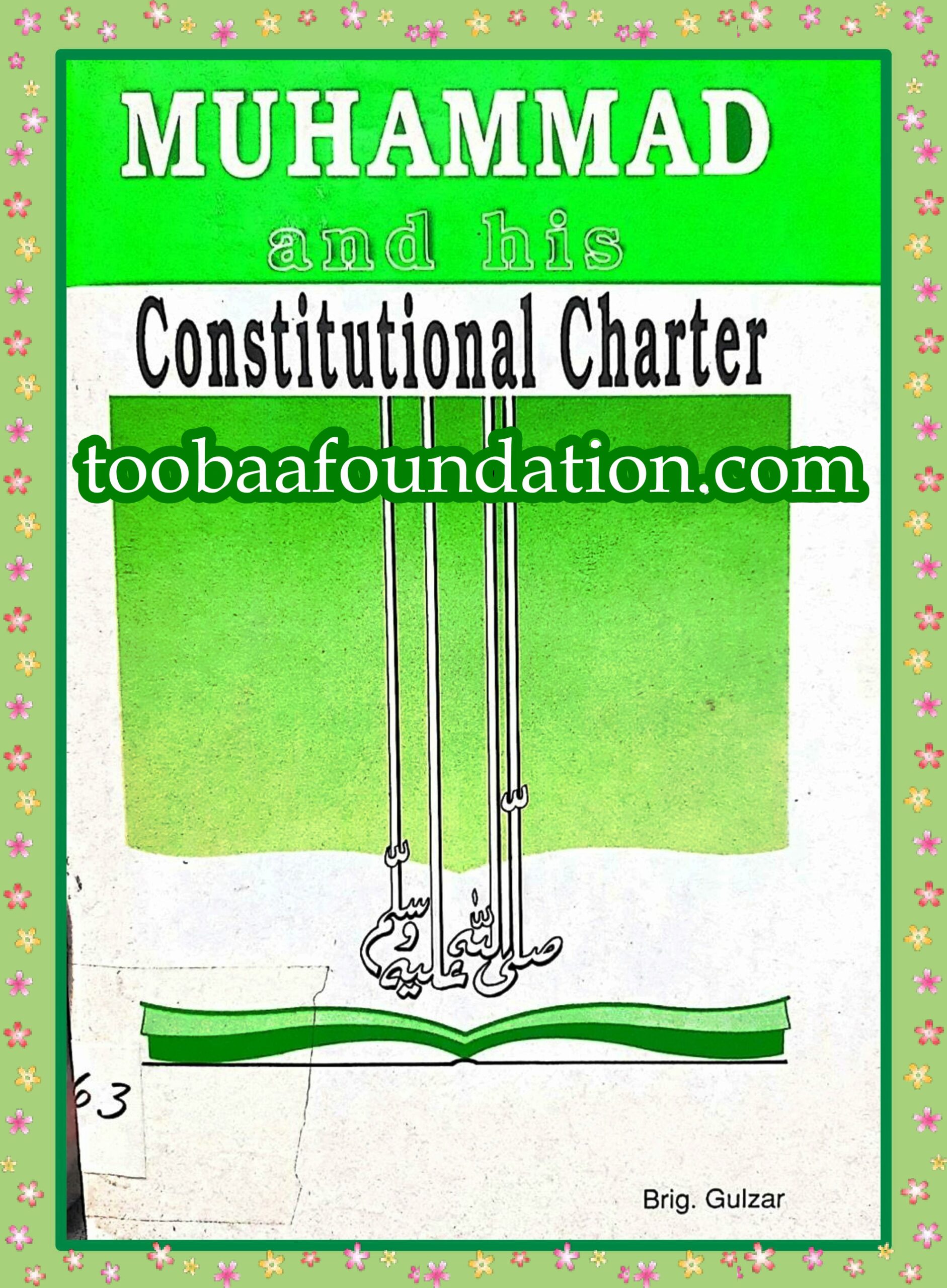
MUHAMMAD (S.A.W)
and his
Constitutional Charter
Brig. Gulzar
MUHAMMAD (S.A.W)
and his
Constitutional Charter
Brig. Gulzar
There are no reviews yet.

رسول اکرم ﷺ کی عسکری اور سیاسی زندگی میں صلح حدیبیہ کا کردار
اور عصر حاضر میں اس کی ضرورت واہمیت, علمی تحقیقی جائزہ
تحقیقی مقالہ برائے پی ایچ ڈی (Ph.D)
ریسرچ اسکالر: محمد طیب خان
زیر نگرانی:ڈاکٹر حافظ محمد ثانی
شعبہ اسلامیات
وفاقی اردو یو نیورسٹی، اسسٹنٹ پروفیسر
شعبہ اسلامیات,عبدالحق کیمپس کراچی وفاقی اردو یونیورسٹی ، عبدالحق کیمپس کراچی
Rasool-e-Akram (S.A.W) ki askari aur siyasi zindagi mein Sulh Hudaybiyah ka kirdar, aur aaj ke dor mein iski zaroorat aur ahmiyat
(Phd. Thesis)
BY: MUHAMMAD TAYYAB KHAN

زادالمعاد
سیرت خیر العباد ﷺ
از: علامہ ابن قیم الجوزی
مترجم حاشیہ نگار : مفتی محمد عزیز الرحمن بجنوری
حصہ چہارم
٭علامہ ابن قیم کی کتاب زاد المعاد ، تعار ف ،منہج و اسلوب اور امتیازی خصوصیات٭
Zaad al-Ma’ad
Seerat Khair ul-Ibad S.A.W
By: Allama Ibn Qayyim al-Jawziyya
Mutarjam Hashiya Nigar: Mufti Muhammad Aziz ur-Rahman Bijnori
Part four
کتب سیرت میں زاد المعاد کی منفرد خصوصیت یہ ہے کہ اس میں صرف حالات اور واقعات کے بیان پر اکتفاء نہیں کیا گیا بلکہ ہر موقع پر یہ بات واضح کرنے کی کوشش کی گئی ہے کہ آنحضرت کے فلاں قول اور فلاں عمل سے کیا حکم مستنبط ہو سکتا ہے اور آنحضرت کے حالات اور معمولات زندگی میں ہمارے لیے کیا کچھ سامانِ موعظت موجود ہے گویا اس کتاب میں امت کے سامنے رسول کریم کا اسوہ حسنہ اس طرح کھول کر رکھ دیا گیا ہے کہ وہ زندگی کے ہر شعبے میں اس سے ہدایت حاصل کر سکے۔

Introduction
My endearing Dr. Maulvi Majid Ali Khan is a learned youth
who has had the privilege of having the education both in the
Western as well as in the Oriental ways. He not only obtained his
M.Sc. from the Muslim University, Aligarh, but also obtained
his Master of Theology degree and Doctorate in Sunni Theology
from there. Because of his zeal in Islamics, he also joined Dărul
‘Uloom (Arabic College), Meerut, on his own, in order to com-
plete his higher studies. He served as a lecturer in Islamic
Studies in the West Indies and then in the Deptt. of Sunni Theo-
logy at the Aligarh Muslim University. Now he is a lecturer in
Islamic Studies at the Jamia Millia Islamia, New Delhi. He is
the author of a number of books and articles on Islam in English
and Urdu and is continuously busy in writing. His most remark-
able feature is that he is an orthodox youth having sound
thoughts and great devotion for Islam.
It is a matter of pleasure that Saudi Arabia’s panel of judges
for the competition of “Research Works on Sirah” selected his
book on the “Sirah” (life of the Holy Prophet) for a coveted
award. I pray to Allah for a general recognition of his book,
Muhammad the Final Messenger, and so as to create the desire
among the readers to follow the “Sirah” of the Holy Prophet
(Sallallahu ‘alaihi wa Sallam).
Ist Şafar, 1399
(Ist January, 1979)
(Maulānā) Abul Hasan ‘Ali,
Rector (Nazim) Nadwatul Ulamā,
Lucknow (India).
toobaafoundation.com
…………………………………….
Foreword
This book has the unique distinction of winning second of the
five awards of the value of SR 50,000.00; 40,000.00; 30,000.00,
20,000.00 and 10,000.00 respectively in a world competition
instituted by the Rabitat-al-‘Alam-al-Islami of Mecca (Saudi
Arabia). The judgement was given by a board of experts com-
prising great scholars of world reputation, both Arab and
non-Arab. Hence it needs no further introduction. There is no
dearth of books written in English on the life and works of the
Prophet of Islam (Sallallahu ‘alaihi wa Sallam). They however,
generally suffer from two defects: the books written by non-
Muslim authors, whatsoever scholarly they may be, lack in a
realistic approach, whereas the books, written by Muslim authors
sometime fail to represent the orthodox school of biographers
of the Prophet (Sallallahu ‘alaihi wa sallam).
This book, being safe from the above defects, can readily be
accepted as a novel and fine contribution to the “Sirat” litera-
ture in English. The main and salient features of the book may
hereunder be summed up:
(1) It is not merely a historical survey of the events related
to the life of the Prophet, but also contains an enlightened dis-
cussion of the socio-economic problems of the society in Madina
and their effective and just solutions by the Prophet.
(2) It repudiates quite convincingly and firmly the charges
levelled and the misgivings created by Western writers against
the Prophet.
(3) The finality of the Prophet has been established on such
a firm basis as leaving no room for an inkling of doubt in the
matter.
(4) A new, modern and most up-to-date interpretation of
“Ghazawat” has been given in it, due to which one would defi-
nitely arrive at the conclusion that the Prophet of Islam never
adopted an aggressive way and that his mission was God-
guided.
(5) The basic sources of the book are the Qur’an and Hadith,
and then the original historical books.
(6) The most remarkable feature of the book is that it presents
the Personality of Muḥammad (Sallallahu ‘alaihi wa sallam) as
the most distinguished Prophet and not simply a reformer. Even
some of the leading biographers of our times have not succeeded
fully in this regard.
I am confident that this book will be of benefit to readers
in general.
8.1.1979
(Professor) Sa’id Ahmad Akberābādī
U.G.C. Professor,
Deptt. of Arabic,
Calicut University (India).
Formerly Dean Faculty of Theology,
The Aligarh Muslim University,
Aligarh (India).
……………………………………………………….

The statement “In the religions of the world, sacred rituals, spiritual thought, and religious rulings exist” suggests that across various religious traditions, there are fundamental elements that encompass the practices, beliefs, and regulations associated with faith.
The mention of “sacred rituals” implies that religious communities engage in specific ceremonies, actions, or observances that hold profound significance within their respective religious frameworks. These rituals often serve as a means of connecting with the divine, expressing devotion, or commemorating important events or figures within the religion.
“Spiritual thought” points to the intellectual and contemplative aspects of religious life. It highlights the deep reflections, philosophical inquiries, and contemplative practices that individuals within religious communities may undertake to explore the nature of spirituality, the purpose of human existence, and the relationship between the individual and the divine or transcendental.
Lastly, “religious rulings” refers to the set of guidelines, principles, or codes of conduct that govern the beliefs and practices within a religious system. These rulings may encompass ethical and moral standards, legal interpretations, guidelines for worship, and rules regarding interpersonal interactions or social behavior.
Overall, this note suggests that within the rich tapestry of religious diversity worldwide, sacred rituals, spiritual reflection, and religious regulations play integral roles in shaping and defining religious traditions, fostering a sense of community, and guiding the religious experiences and practices of believers.

SEERAT AL-NABI
The Life and Times of the Great Prophet of Islam
Hadrat Muhammad Rasool-Allah (may peace be on him)
and
His Chief Companions
By: Professor Dr. Mahmud Brelvi
With a Foreword by
Mr. A. K. Brohi
Chairman, National Hijra Committee
INSTITUTE OF SINDHOLOGY
University of Sind
Jamshoro, Sind, Pakistan.
1982/Rabi’-ul-Awwal, 1403 A.H.
This image represents the book 1861: The Civil War Awakening by Adam Goodheart. The book provides a detailed account of the social, political, and cultural conditions that led to the American Civil War. Content is educational and review-based, provided by Tooba Foundation Library.

MUHAMMAD (S.A.W) THE EDUCATOR OF MANKIND
BY: AFZALUR RAHMAN
Be the first to review “MUHAMMAD (S.A.W) and his Constitutional Charter”