-

MUHAMMAD (S.A.W) THE EDUCATOR OF MANKIND
MUHAMMAD (S.A.W) THE EDUCATOR OF MANKIND
BY: AFZALUR RAHMAN
-

MUWATTA IMAM MALIK (English)
The Muwatta of Imam Malik, compiled during the early Abbasid period, is regarded by some scholars, including Shah Waliyullah, as the most authentic book on Ḥadith. The juristic verdicts in Muwatta’
reflect the practice of the Medinese and the consensus of the Medinese scholars.
After the demise of the Holy Prophet (may peace be upon him), many of his Companions settled in the conquered provinces. Some of their successors collected and codified Hadith. For example, Ibn Jariḥ
in Mecca, Awza’i in Syria, Hammad in Başrah, Haitham in Wasit, Ma’mar in the Yemen, Ibn Mubarak in Khurasan and Jarir b. Hamid in Rayy collected Hadith. But none of these collections could compare
with the Muwatta’ of Imam Malik, who passed his whole life in Medina and, therefore, had direct access to the most reliable authorities on Hadith, because most of the leading Companions of the Holy Prophet
(may peace be upon him) and their successors lived and died in Medina and narrated traditions from the Holy Prophet (may peace be upon him). The Muwatta’ of Imam Malik is based on the traditions narrated by them and the juristic verdicts given by them.
The word “Muwatta” literally means the trodden or beaten path. In his book, Musawwa, Shah Waliyullah says that “trodden path” or “beaten path” means the path followed by eminent religious
authorities. In other words, it means those verdicts which have been discussed by all religious scholars and about which there is complete agreement. According to Maulānā Sulaiman Nadvi, “Muwatta” means that trodden or beaten path which has been trodden upon by all the Companions of the Holy Prophet (may peace be upon him), or, in other words, it means the agreed practice of the Companions of the Holy Prophet (may peace be upon him).
Before Imam Malik finalised his book, the Muwaṭṭa’ contained about ten thousand traditions of the Holy Prophet (may peace be upon him), but since Imam Malik exercised great care in selecting Hadith (traditions), he omitted eight thousand traditions. In its final form, the Muwaṭṭa’ contains only about two thousand aḥadīth (traditions). Since the Muwatta’ deals only with such aḥādith as have a bearing on juristic verdicts, it omits many chapters and headings found in the Sahihs of Imam Bukhārī, Imam Muslim, Tirmidhi, and others.
Muwatta’ has been narrated from Imām Mālik in thirty different ways. Of these, sixteen are famous. Four narrations, those by Yaḥyā, Ibn Bukair, Abū Mus’ab and Ibn Wahb, are most authoritative, but Yahya’s narration surpasses them all in popularity and fame. Imam Malik’s jurisprudence (fiqh) produced lasting effects on the entire Muslim world. His disciples spread in all the provinces of the Muslim Empire. It is true that Imam Abu Hanifah’s disciples were scattered in the Hijäz, Persia and Transoxania, but they did not reach Africa and Spain. Imām Awzā’i’s fiqh (jurisprudence) won popularity in Spain, but it did not benefit the people of Iraq and Persia. On the other hand, Imam Malik’s disciples carried his juristic learning to all corners of the Muslim world.
The Muwaṭṭā’ of Imam Malik was compiled during the reign of Mansur, the second Abbasid Caliph. After he was installed as Caliph in 136 AH., Mansur made his first Pilgrimage to Mecca. He visited Medina where he was received by leading scholars and men of eminence. Sufyan Thawrī, Sulaiman Khwaṣṣ and Imam Malik also came to greet him. When Mansur saw Imam Malik, he addressed him saying: “I have become disgusted with the differences of the jurists on Islamic law in different regions of the Empire. There is nothing of juristic learning in Iraq. The Syrians are known for their ardent love for jihad There is little learning among them. All juristic knowledge and scholarship is centred in Hijaz and you are the leader of the scholars of Hijaz. I wish that your book, Muwaṭṭa’, may be kept in a prominent place in the Ka’bah, so that all the people should refer to it on juristic questions. I also wish that copies of the Muwaṭṭā’ may be circulated in all parts of the Empire so that all juristic verdicts may conform to it.” But Imam Malik expressed his disagreement with the opinion of Manşür. He said: “The Companions of the Holy Prophet (may peace be upon him) settled in all provinces of the Empire. Their juristic opinions and verdicts command respect and reverence of jurists in different regions of the Empire and the people of these regions follow their juristic opinions. Under these conditions, the people should not be forced to follow the opinions of a single jurist who is not infallible, after all, and may commit errors.”
Another incident of the same kind shows the sturdy independence of mind of Imam Malik and his refusal to submit to the wishes of the governmental authority. Although Manṣur was very kind to the Imām, the latter never recognised the legitimacy of his government. Once he issued a fatwa that the caliphate belongs rightfully to Nafs Zakiyyā, a descendant of the Holy Prophet (may peace be upon him). The people objected saying that they had sworn fealty to Manṣur. Imām Malik said: “Manṣur has coerced you into doing this and the Shari’ah does not regard as valid any act done under coercion. There is a hadith (tradition of the Holy Prophet) that if a man is forced to divorce his wife, the divorce would be invalid.” On hearing this, Ja’far, the Governor of Medina, asked the people to renew their oath of fealty to Mansur and ordered Imam Malik not to issue any fatwa declaring that a divorce obtained by force or under coercion is invalid as this would strengthen the case of those who regarded as invalid the
oath of fealty obtained by Manṣur under coercion. But Imam Malik refused to be browbeaten and continued to give his verdict against divorce under coercion. For this act of disobedience to the governmental authority, Imam Malik was flogged in public until he bled white, but still he refused to bow to the wishes of the rulers.
22 December 1979
(Prof) Mazheruddin Siddiiq
The Muwatta of Imam Malik holds significant importance in the Hadith tradition of Islamic studies for several reasons:
- Authenticity and Reliability: The Muwatta is considered one of the most authentic collections of Hadith in Imam Malik was known for his rigorous standards in selecting Hadith, and he only included those narrations that he believed met the criteria of authenticity. This makes Muwatta a trusted source of Hadith for scholars and students of Islamic studies.
- Early Compilation: Muwatta is one of the earliest Hadith compilations in Islamic history. Imam Malik compiled it during the 8th century, making it one of the foundational works in the development of Islamic jurisprudence (fiqh) and Hadith scholarship.
- Geographical Significance: Imam Malik was based in Medina, which is considered one of the holiest cities in Islam. His collection reflects the practices and traditions of the people of Medina during his time. This makes Muwatta particularly valuable for understanding the early Islamic community and its practices.
- Integration with Fiqh: Muwatta is unique among Hadith collections because it integrates Hadith with jurisprudential (fiqh) rulings. Imam Malik sought to provide practical guidance to jurists, judges, and the Muslim community as a whole by combining Hadith with legal rulings. This approach has had a lasting impact on the development of Islamic jurisprudence.
- Recognition by Islamic Scholars: Muwatta has been widely recognized and respected by scholars of different Islamic schools of thought. It is not limited to the followers of the Maliki school; scholars from other schools have also acknowledged its significance.
- Cultural and Historical Insight: Beyond its religious and legal importance, Muwatta provides valuable insights into the culture and society of early Islam. It contains Hadith related to various aspects of life, including social customs, ethics, and the behavior of the Prophet Muhammad, offering a holistic view of the time.
- Comparative Study: Scholars and researchers often use Muwatta as a basis for comparative studies of Hadith across different collections. Its unique compilation style and content make it a valuable resource for understanding how Hadith were transmitted and evaluated in the early Islamic period.
In summary, the Muwatta of Imam Malik is highly significant in the Hadith tradition of Islamic studies due to its authenticity, early compilation, geographical context, integration with fiqh, recognition by scholars, and its role in providing insights into early Islamic society and culture. It continues to be a vital source for scholars and students of Islam seeking to understand the Prophet’s traditions and the foundations of Islamic jurisprudence.
The English translation of the Muwatta of Imam Malik:
- Islamic Scholarship: Highlighting the translation’s role in advancing Islamic scholarship and knowledge.
- Hadith Tradition: Emphasizing the translation’s connection to the broader tradition of Hadith in Islam.
- Cross-Cultural Understanding: Signifying how the English translation promotes cross-cultural understanding by making Islamic texts accessible to English-speaking audiences.
- Religious Texts: Identifying the translation as a key religious text for Muslims and scholars of Islam.
- Historical Significance: Stressing the historical importance of translating this early Islamic work into English.
- Jurisprudence and Fiqh: Reflecting the translation’s relevance to the study of Islamic jurisprudence (fiqh).
- Medina’s Legacy: Highlighting the role of Medina’s historical legacy in shaping the Muwatta and its translation.
- Comparative Religion: Indicating how the translation aids in comparative religion studies, allowing scholars to compare Islamic traditions with other religious texts.
- Cultural Heritage: Recognizing the translation as part of the cultural and religious heritage of Islam.
- Interfaith Dialogue: Suggesting its role in promoting interfaith dialogue and understanding.
-

NATURAL HISTORY
Published in 1950, Natural History Magazine – Volume LIX by the American Museum of Natural History stands as a timeless tribute to the wonders of the natural world. This issue features engaging articles on biology, geology, archaeology, and environmental science, written to captivate both scholars and curious readers. The cover’s minimalist yet elegant design reflects the scholarly publishing style of the mid-20th century. More than just a scientific journal, this magazine invites readers to explore and connect with nature through the lens of discovery and education.
Title: Natural History Magazine – Volume LIX (1950) Author/Institution: American Museum of Natural History, New York Subjects: Natural Sciences, Biology, Geology, Environment, Archaeology Type: Periodical / Journal Language: English Publication Year: 1950 Publisher: American Museum of Natural History Place of Publication: New York, USA Description: This magazine issue contains articles on various aspects of natural history and was published in 1950. Its cover features a minimalist yet elegant design, reflecting the scholarly publishing style of the mid-20th century.
-

Never Leave Me PDF
Never Leave Me PDF By Harold Robbins
This book is available in three formats (Kindle),(DOCX/DOC),PDF
PDF prize FreeDownload
DOCX/DOC Prize $8 withe Book Cover
Kindle Prize $5 With Book Cover
Note: This prize is not definitive; it can be decreased or increased.
This book is not available for free, you can buy this book from Amazon and other bookshops for a low price.
To purchase the book, you can Contact US this or WhatsApp & FaceBook.CONTACT TO BUY
-

pakistan and Muslim India With Foreword By Qaid-i-Azam Mr.M.Ali Jinah
pakistan and Muslim India With Foreword By Qaid-i-Azam Mr.M.Ali Jinah
-
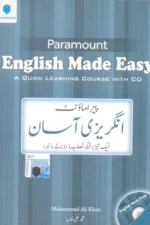
PARAMOUNT ENGLISH MADE EASY PDF
PARAMOUNT ENGLISH MADE EASY BY MUHAMMAD KHAN
This book is available in three formats (Kindle),(DOCX/DOC),PDF
PDF prize FreeDownload
DOCX/DOC Prize $20 withe Book Cover
Kindle Prize $15 With Book Cover
Amzone Prise https://amzn.to/42OiwR2
Note: This prize is not definitive; it can be decreased or increased.
This book is not available for free, you can buy this book from Amazon and other bookshops for a low price.
To purchase the book, you can Contact US this or WhatsApp & FaceBook.
-

PERSPECTIVES ON MORALITY AND HUMAN WELL-BEING BY SYED NAWAB HAIDER NAQVI
PERSPECTIVES ON MORALITY AND HUMAN WELL-BEING BY SYED NAWAB HAIDER NAQVI
-

PONDERING OVER THE QURAN BY MOAMMAD SALEEM KAYANI
PONDERING OVER THE QURAN BY MOAMMAD SALEEM KAYANI
-
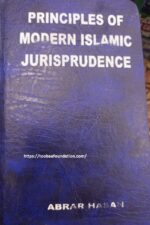
PRINCIPLES OF MODREN ISLAMIC JURISPRUDENCE BY ABRAR HASAN
PRINCIPLES OF MODREN ISLAMIC JURISPRUDENCE BY ABRAR HASAN
-

Public Library Administration
Public Library Administration
By Royston Brown
PREFACE
THIS BOOK forms part of a series of outlines of modern librarianship, and its construction and content were con- ditioned by that framework. The field of public library administration touches the subject matter covered by all the other titles in the series, and a conscious effort has been made to avoid eneroaching too far on the province of my colleagues. For example, the subjects of cataloguing and classification, important though they are for public libraries, have been barely touched on here and other topics have been sketched in and will need to be pursued elsewhere.
What has been attempted is a logical progression through the field of public library administration, using that term in its widest sense as the management of public library services. Beginning with the purpose of the public library and its legislative base, management structure, financing and the staffing are outlined. Having set up the service, the acquisition of materials and their organisation and housing, together with the various services provided, are briefly described; and finally, arrangements for co-operation at various levels are outlined.
The purpose is to give the student a comprehensive over- view of the subject, concentrating on significant aspects in the development of modern public library systems.
My thanks are due to the publisher for patiently allowing me to extend the deadline for delivery of the text, to Marlene for deciphering my scribble and typing the script, and to our children Lindsey, Jonathan and Zoe for suffering the absence of one or both parents during the production period. Finally, although the ideas and experiences of many colleagues are con- sciously or unconsciously reflected in this book, responsibility
for their appearance in a new guise, and for any errors of omission or commission, is entirely mine.
Hemingford Grey,
Cambridgeshire.
Royston Brown
-
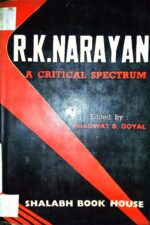
R.K. Narayan: A Critical Spectrum By Bhagwat S. Goyal
R.K. Narayan: A Critical Spectrum Bhagwat S. Goyal
This book is available in three formats (Kindle),(DOCX/DOC),PDF
PDF prize $5
DOCX/DOC Prize $15 withe Book Cover
Kindle Prize $10 With Book Cover
Note: This prize is not definitive; it can be decreased or increased.
This book is not available for free, you can buy this book from Amazon and other bookshops for a low price.
To purchase the book, you can Contact US this or WhatsApp app.CONTACT TO BUY
-

Reading Instruction for today,s Children Second edition
Reading Instruction for today,s Children
Nila Banton Smith/H.Alan Robinson
This book is presented for introduction if you want to buy this book or get its pdf then you can contact us through whatsapp number or comments in review, also through facebook page. -
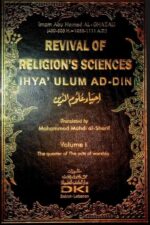
Revival of Religious Sciences (Ihya Ulum al-Din) – Volume I
Revival of Religious Sciences (Ihya Ulum al-Din) – Volume I is one of the most influential masterpieces of Islamic spirituality and ethics written by the renowned Muslim scholar Al-Ghazali. This timeless work combines Islamic theology, jurisprudence, spirituality, morality, and self-purification into a comprehensive guide for Muslims seeking both inner and outer religious reform.
Widely regarded as one of the greatest books in Islamic intellectual history, Ihya Ulum al-Din explores worship, character building, purification of the soul, social conduct, and the path toward closeness to Allah. This English translation by Mohammad Mahdi al-Sharif makes the classical teachings of Imam Al-Ghazali accessible to modern readers worldwide.
The book is essential for students of Islamic studies, Tasawwuf (Sufism), spirituality, ethics, theology, and classical Islamic literature. Its profound insights continue to inspire scholars, researchers, and readers across generations.
This digital edition is available in the Tooba Book Foundation Digital Library, offering access to a vast collection of free Islamic PDF books, rare manuscripts, and scholarly resources online
Revival of Religious Sciences (Ihya Ulum al-Din) – Volume I
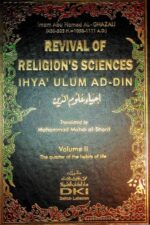
Revival of Religious Sciences (Ihya Ulum al-Din) – Volume II
Revival of Religious Sciences (Ihya Ulum al-Din) – Volume III
Revival of Religious Sciences (Ihya Ulum al-Din) – Volume IV
-
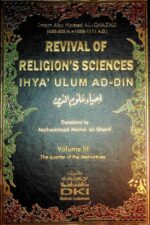
Revival of Religious Sciences (Ihya Ulum al-Din) – Volume III
Revival of Religious Sciences (Ihya Ulum al-Din) – Volume III is the third volume of the monumental Islamic classic authored by the renowned theologian, jurist, and spiritual reformer Al-Ghazali. In this volume, Imam Al-Ghazali delves deeper into the inner dimensions of faith, focusing on spiritual purification, self-discipline, sincerity, repentance, patience, gratitude, and the diseases of the heart.
Recognized as one of the most important works in Islamic intellectual and spiritual history, Ihya Ulum al-Din masterfully combines Qur’anic teachings, Prophetic traditions, ethics, and practical spirituality. Volume III particularly emphasizes the refinement of character and the spiritual journey toward closeness to Allah, making it a foundational text in Tasawwuf (Sufism), Islamic ethics, and self-purification.
This English translation by Mohammad Mahdi al-Sharif provides modern readers with access to the timeless wisdom of Imam Al-Ghazali, benefiting students of Islamic studies, researchers, scholars, and readers seeking authentic spiritual guidance.
This digital edition is available in the Tooba Book Foundation Digital Library, offering readers free access to a vast collection of Islamic PDF books, classical Islamic literature, and scholarly resources online.
Revival of Religious Sciences (Ihya Ulum al-Din) – Volume I
Revival of Religious Sciences (Ihya Ulum al-Din) – Volume II
Revival of Religious Sciences (Ihya Ulum al-Din) – Volume III
Revival of Religious Sciences (Ihya Ulum al-Din) – Volume IV
-
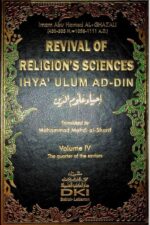
Revival of Religious Sciences (Ihya Ulum al-Din) – Volume IV
Revival of Religious Sciences (Ihya Ulum al-Din) – Volume IV is the fourth and final volume of the legendary Islamic masterpiece authored by the eminent Muslim scholar, theologian, and spiritual reformer Al-Ghazali. This concluding volume focuses on the ultimate stages of spiritual refinement, remembrance of death, the afterlife, repentance, divine love, trust in Allah, and the path to eternal success according to Islamic teachings.
Widely considered one of the greatest works in Islamic civilization, Ihya Ulum al-Din combines Qur’anic wisdom, Prophetic traditions, spirituality, ethics, and practical guidance for personal transformation. Volume IV presents profound discussions on the human soul, accountability in the Hereafter, and the spiritual realities that shape a believer’s relationship with Allah.
This English translation by Mohammad Mahdi al-Sharif brings the timeless teachings of Imam Al-Ghazali to contemporary readers, making the work accessible to students of Islamic studies, scholars, researchers, and anyone interested in authentic Islamic spirituality and self-purification.
This digital edition is available in the Tooba Book Foundation Digital Library, where readers can access a rich collection of free Islamic PDF books, rare manuscripts, classical Islamic literature, and scholarly resources online
Revival of Religious Sciences (Ihya Ulum al-Din) – Volume I
Revival of Religious Sciences (Ihya Ulum al-Din) – Volume II
Revival of Religious Sciences (Ihya Ulum al-Din) – Volume III
Revival of Religious Sciences (Ihya Ulum al-Din) – Volume IV
-

Saneha-e-Mashriqi Pakistan Tasweer Ka Doosra Rukh
Saneha-e-Mashriqi Pakistan Tasweer Ka Doosra Rukh By Amir Abdullah Khan Niazi
-

SEERAT AL-NABI S.A.W
SEERAT AL-NABI
The Life and Times of the Great Prophet of Islam
Hadrat Muhammad Rasool-Allah (may peace be on him)
and
His Chief Companions
By: Professor Dr. Mahmud Brelvi
With a Foreword by
Mr. A. K. Brohi
Chairman, National Hijra Committee
INSTITUTE OF SINDHOLOGY
University of Sind
Jamshoro, Sind, Pakistan.
1982/Rabi’-ul-Awwal, 1403 A.H.
-

SEIZE THE MOMENT AMERICA,S CHALLENGE IN A ONE-SUPERPOWER WORD BY RICHARD NIXON
SEIZE THE MOMENT AMERICA,S CHALLENGE IN A ONE-SUPERPOWER WORD
BY RICHARD NIXON
-

SOCIAL SKILLS AND WORK EDITED BY MICHAEL ARGLE
Social Skills and Work Edited by Michael Argle
-

Social theories of the press : early German and American perspectives PDF
https://amzn.to/3PiYett
-

Stephen Hawking A Life in Science By by John Gribbin , Michael White
Stephen Hawking A Life in Science By by John Gribbin (Author), Michael White (Author)
You visit this website and buy books in PDF and Kindle at a very low price compared to Amazon and other bookshops. Let it be clear that this website is free for books. You buy books from this website and support our mission. Financial support. The purpose of this website is to unite libraries around the world and create a digital catalog of the books in them and make the rare manuscripts scanned and made available in PDF and Kindle format for the service of scholars.
Go ahead and support us in this mission.